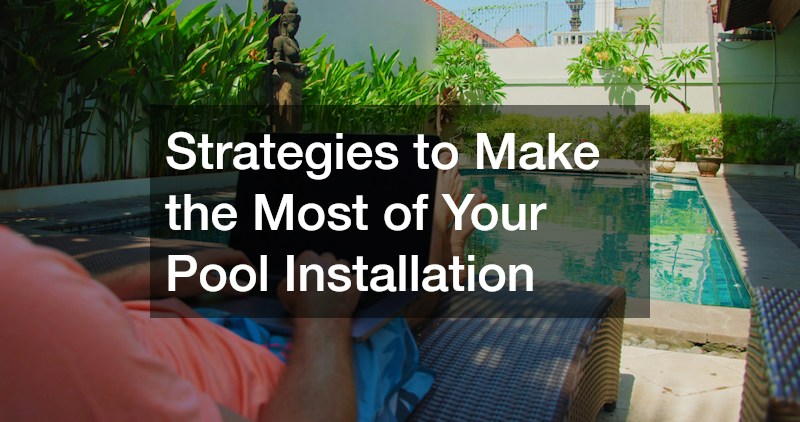
A backyard swimming oasis is a major investment that fundamentally reshapes how a property is used, enjoyed, and perceived. However, the water itself is only one part of the equation when it comes to long-term satisfaction and utility. Maximizing the return on this substantial investment requires strategic planning that extends far beyond the basic dimensions of the basin. Homeowners must look at the surrounding environment, materials, aesthetics, and long-term care requirements to truly elevate the space.
By making calculated, informed decisions during the initial design and installation phases, you can create a cohesive, low-maintenance, and highly functional outdoor living space that serves as a private resort for decades. From mapping out the perfect location to capture the afternoon sun to selecting slip-resistant materials that keep your family safe, every detail matters. Explore actionable strategies to ensure your new aquatic retreat meets your immediate lifestyle desires while remaining a sustainable, easy-to-manage asset for the long haul. Let us dive into the critical planning stages, structural choices, and maintenance systems that will help you extract the maximum value and enjoyment from your backyard transformation.
Choose the Ideal Location Based on Sun Exposure and Yard Layout

Deciding exactly where to place your new swimming area is the most consequential choice you will make during the entire project. The right location enhances usability, lowers heating costs, and minimizes maintenance, while poor placement can lead to endless headaches.
Start by meticulously analyzing the sun and wind patterns in your backyard. Placing the water in an area receiving maximum direct sunlight naturally warms the water, reducing reliance on artificial heaters. Conversely, windbreaks are essential. Continuous breezes make swimmers chilly when stepping out and accelerate evaporation and chemical loss.
Before finalizing blueprints, map out underground utility lines and familiarize yourself with zoning setbacks. Municipalities dictate how close structures can be built to property lines and easements. Identifying these constraints early prevents costly redesigns or legal disputes later.
Another critical factor is the existing canopy. Overhanging branches drop a constant barrage of leaves, twigs, and pollen directly into your skimmers, clogging the filtration system and throwing off your water chemistry. Furthermore, aggressive root systems from large oaks, willows, or ficus plants can aggressively seek out moisture, potentially cracking subterranean plumbing lines or shifting the structural shell. If you have large vegetation encroaching on your ideal site, it is highly recommended to hire a professional tree service to safely remove problematic root systems or overhanging branches entirely prior to excavation.
Finally, collaboration is key to harmonizing the design with your existing layout. You should consult extensively with your pool builder to adjust the exact shape, depth profile, and orientation based on your soil conditions and the natural drainage patterns of your yard. Proper placement is a delicate balance of aesthetics, physics, and municipal law. Think of the yard holistically, considering how the sun arcs from east to west during the peak summer months. By getting this foundational step right, you set the stage for a seamless installation process.
Select Heat-Resistant, Slip-Proof Materials for Your Surround
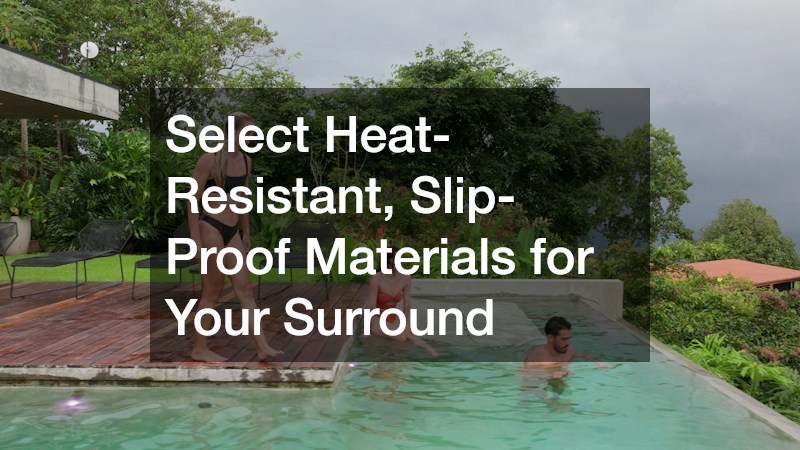
The perimeter area, often referred to as the surround or patio, dictates the comfort, safety, and visual appeal of your aquatic retreat. Selecting the right materials for this high-traffic zone is just as important as choosing the interior finish of the basin itself.
When evaluating surface temperatures, barefoot comfort is paramount. Dark stones like slate are gorgeous but absorb immense solar heat. On a scorching afternoon, these surfaces become painfully hot, rendering the space unusable without footwear. Instead, consider light-colored composites, travertine, or specialized cool-deck coatings that reflect UV rays and remain comfortable underfoot even in direct sunlight.
Traction is another non-negotiable priority. The surround will inevitably be soaked with splashed water, creating a severe slipping hazard if the wrong material is chosen. High-gloss tiles or smooth, polished stones should be strictly avoided in splash zones. You must prioritize highly textured surfaces that offer superior grip.
You can also match different materials to specific usage zones within the yard:
- Lounging Zones: For elevated sunbathing platforms or shaded seating areas set slightly back from the splash zone, composite or natural wood provides a warm, organic feel. If you opt for multi-level platforms or intricate wooden elements, bringing in a specialized deck contractor ensures the substructure is waterproofed and built to withstand the humid microclimate.
- High-Traffic Splash Zones: The immediate perimeter requires durability and water resistance. Stamped or heavily brushed concrete work offers a customizable, slip-resistant base that mimics natural stone without the heat retention or high cost.
Finally, design for seamless transitions. The pathway from your home’s back door to the water’s edge should be flush and trip-free. Abrupt changes in elevation, uneven pavers, or slippery thresholds can cause accidents. Ensuring your chosen materials align perfectly with your home’s existing foundation and exterior aesthetic creates a unified, resort-like atmosphere that bridges the indoors and outdoors seamlessly.
Blend Greenery and Stone for a Cohesive Backyard Retreat
A truly breathtaking backyard does not treat the swimming area as an isolated feature; rather, it integrates the water into a larger, multi-functional outdoor living space. Blending organic greenery with structured stone elements transforms a simple backyard into a cohesive, private retreat.
To achieve this, you need to design multi-functional zones. Break the yard down into distinct, purposeful areas: a dining sector with an outdoor table, a lounging zone with chaise chairs, and the active swimming area. These zones do not need physical walls to separate them; instead, you can use natural visual cues like a shift in paving materials, a low seating wall, or a cluster of strategically placed planters to define each space.
When selecting greenery, choose your foliage with extreme care. The wrong plants will create a nightmare of maintenance.
- Avoid messy shedders, pine trees with acidic needles, or anything that drops heavy fruit or blossoms into the water.
- Stay away from plants with aggressive, invasive root systems that could threaten underground plumbing or the shell.
- Instead, opt for broad-leafed evergreens, ornamental grasses, and sturdy succulents that provide lush color and texture without generating constant debris.
Planning the surrounding landscaping is essential to provide natural privacy from neighbors, using dense hedges rather than relying solely on sterile fences.
Beyond the plants, incorporating robust structural elements anchors the space and provides year-round visual interest, even when the water is too cold for swimming. Built-in stone planters, sunken fire pits, or elevated water features add architectural weight to the yard. For these complex structural integrations, it is highly recommended to utilize professional hardscaping services to build sound retaining walls, level terraces, or elaborate outdoor kitchens that require precise engineering and heavy masonry.
Lastly, managing drainage around new structures is critical. The earth must be graded so rainwater and splash-out flow away from the basin, rather than carrying mulch and dirt into your pristine water. Proper grading ensures your oasis remains beautifully intact.
Install Secure, Code-Compliant Barriers and Walkways
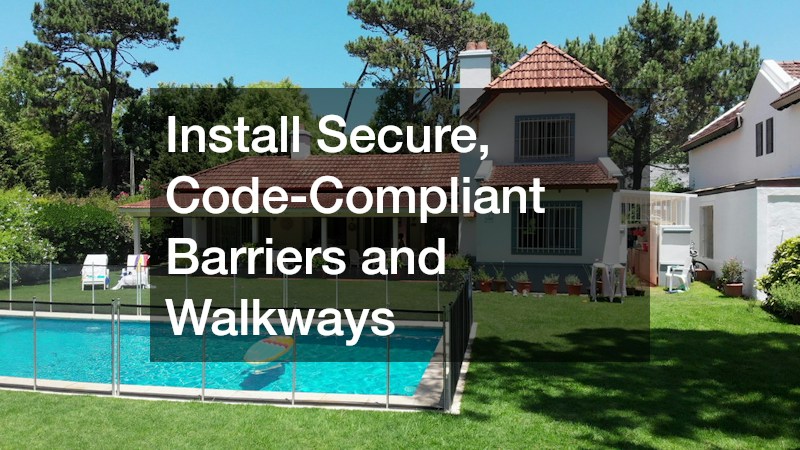
Safety is the paramount concern for any homeowner installing a large body of water. Fulfilling legal requirements and protecting your family, pets, and neighbors requires the installation of secure, code-compliant barriers and logical, well-lit walkways.
Navigating local safety codes should be your very first step in this phase. Nearly all municipalities have strict requirements governing perimeter barriers. These typically mandate a minimum height—often four to five feet—along with self-closing, self-latching gates that open outward. Many local codes also require audible alarms on any house doors that lead directly to the water area. Familiarizing yourself with these non-negotiable rules prevents fines and forced redesigns.
Fortunately, meeting safety codes does not mean sacrificing aesthetics. You have a variety of materials to choose from that blend security with style.
- Glass panels offer an ultra-modern, invisible look that preserves uninterrupted sightlines across your property, though they require frequent cleaning.
- Wrought iron or aluminum panels provide classic elegance and allow breezes to flow through freely while maintaining full visibility.
- Vinyl and composite barriers offer immense privacy for dense suburban neighborhoods and require almost zero maintenance.
To ensure the perimeter barrier strictly meets local safety codes while looking elegant, you should hire experienced fence contractors who are deeply familiar with municipal inspection requirements and aquatic safety standards.
The flow of foot traffic must also be designed carefully. Establish pathways guiding guests naturally from the house to the entry steps, preventing people from trampling plant beds or tracking dirt into the water. Using professional paving services to lay durable, even walkways that connect the various zones safely is a smart investment. They can ensure the ground is properly compacted and the stones are leveled to prevent tripping hazards.
Finally, incorporate low-voltage LED lighting into these walkways and barriers. Flush-mounted deck lights, subtle path markers, and downward-facing post-cap lights ensure safe nighttime navigation. Proper illumination allows you to enjoy the space well after sunset while minimizing the risk of slips or falls.
Automate Cleaning and Winterize Properly to Extend Lifespan

The long-term enjoyment of your backyard retreat hinges directly on how easily you can maintain it. Modern technology has drastically reduced the manual labor required to keep water crystal clear, but extending the lifespan of your equipment still requires a dedicated routine and proper seasonal care.
Investing in automation is one of the smartest decisions you can make. Today’s smart technology allows you to control nearly every aspect of the environment from an application on your smartphone.
- Robotic vacuums independently scrub the floors and walls, filtering out fine debris without relying on your main pump.
- Automated chemical dispensers constantly monitor pH and chlorine levels, injecting exact doses to prevent algae blooms and cloudy water.
- Variable-speed smart pumps and automated heaters can be scheduled to run during off-peak energy hours, drastically reducing your monthly utility bills.
Even with automation, establishing a routine schedule is mandatory. You must stay on top of daily, weekly, and monthly maintenance tasks. Skimming floating debris before it sinks, testing chemical balances manually to verify automated sensors, and regularly backwashing your filters will prevent immense wear and tear on your plumbing. However, for complex tasks like acid washes, delicate equipment inspections, and comprehensive seasonal openings or closings, scheduling recurring professional pool services is highly advised to ensure nothing is overlooked.
If you live in a climate that experiences freezing temperatures, protecting the system during the off-season is vital to prevent catastrophic damage. Winterizing involves a meticulous step-by-step process of blowing all the water out of the underground lines and plugging them to prevent burst pipes. The water chemistry must also be balanced with winterizing algaecides to prevent a green, swampy mess when spring arrives.
Securing the surface during these dormant months is the final, critical step. You must highlight the necessity of investing in motorized or safety-anchored pool covers to retain heat, reduce evaporation, block winter debris, and most importantly, prevent children or animals from accidentally falling into the icy water. A high-quality cover puts your backyard into a safe hibernation until warm weather returns.
Transforming your backyard into a premier aquatic oasis is an exciting journey that extends far beyond simply excavating a hole and filling it with water. As outlined here, optimizing your installation requires looking beyond the basin itself to the surrounding materials, the integration of nature, the logical flow of foot traffic, and the implementation of robust safety and maintenance features.
The takeaway is that upfront planning, meticulous attention to detail, and a commitment to high-quality materials will yield a functional, beautiful, and low-stress outdoor environment. Cutting corners on patio traction, neglecting proper drainage, or ignoring sun patterns can lead to long-term frustrations that detract from the joy of your investment. By taking a holistic approach to your property, you ensure that every element—from the non-slip walkways to the automated cleaning systems—works in perfect harmony.
Now is the perfect time to start sketching out your ideal layout. Begin prioritizing which aesthetic upgrades and technological integrations matter most for your specific lifestyle, family needs, and local climate. With careful preparation and strategic execution, your new backyard will provide a safe, luxurious, and relaxing escape for decades to come.