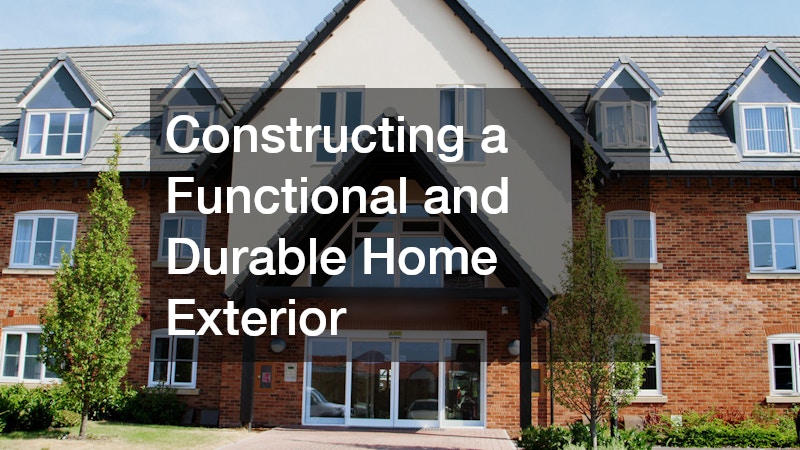
Creating a resilient home exterior that endures weather without excessive repair costs involves smart material selection, structural integrity, and effective water management. Many homeowners mistakenly treat elements like roof replacement or driveway paving as separate projects. In fact, your home’s exterior is an interconnected system. When one part fails to manage water or resist wear, it affects the entire structure. Longevity comes from understanding how components protect each other. A well-designed roof keeps water off the siding, a sloped yard shields the foundation, and a managed landscape prevents damage. Focus on structural resilience rather than cosmetic upgrades to maintain comfort, enhance living space, and protect your investment from changing seasons and weather.
Directing Rainwater Away from Your Foundation
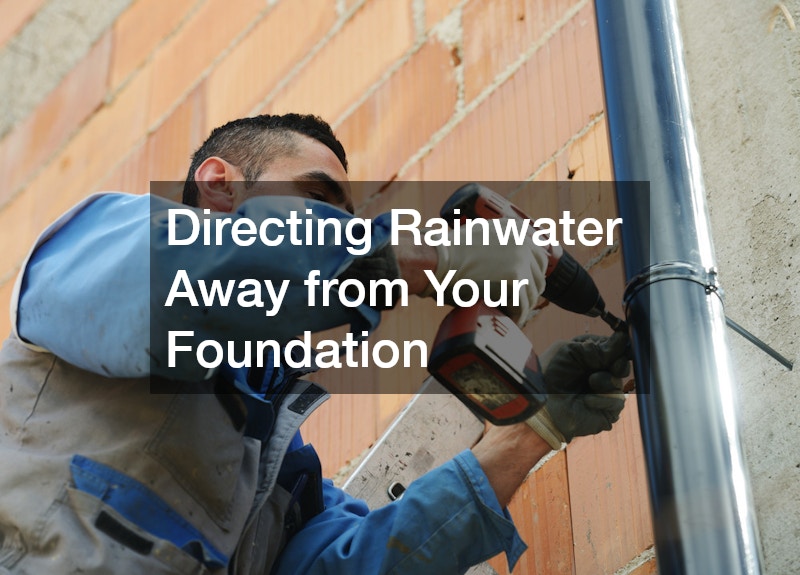
Water is the ultimate antagonist of residential longevity. When heavy rain hits your roofline, it generates large volumes of runoff that must be efficiently collected and routed away from your home. Standard sectional gutters, although common, have vulnerabilities because their joints are prone to separation over time. Thermal expansion and contraction cause seams to warp, split, and leak. A leaking gutter along the roofline forces water backward against the fascia board and downward along the exterior walls, causing hidden rot before you notice any drips inside.
To combat this, modern construction relies heavily on specialized water mitigation. Investing in a professional seamless gutter installation eliminates the weak points entirely, as the troughs are extruded from a single continuous piece of metal on-site to match the exact dimensions of your roofline.
- Choose a heavy-gauge aluminum or copper to prevent sagging under the weight of wet leaves or winter ice buildup.
- Size your troughs and downspouts according to your local rainfall intensity; a roof with a steep pitch collects water rapidly and requires wider channels.
- Ensure that downspout extensions discharge water at least five feet—preferably ten feet—away from the foundation wall to prevent soil saturation.
Protecting Siding and Windows with Structural Overhangs
While gutters manage water falling from the roof, wind can push rain against windows, doors, and siding. Architectural overhangs and structural shields are indispensable here. Deep eaves and wide soffits act as a natural umbrella for your home’s vertical surfaces, significantly reducing moisture contact with windowsills and door frames.
However, many homes feature architectural styles with minimal built-in roof overhangs, leaving entryways completely exposed to weather damage. Homeowners frequently turn to specialized awning businesses to design and install engineered overhead covers that protect these vulnerable transition zones.
- Select durable, weather-resistant frames made of powder-coated aluminum or steel that can withstand high wind loads.
- Opt for marine-grade fabrics or hard-top polycarbonate panels that resist UV degradation and fading over decades of sun exposure.
- Ensure the mounting brackets are anchored directly into the structural framing of the house, rather than just the siding, to prevent wind pull.
Balancing Thermal Performance with Moisture Deflection
Beneath your visible siding lies the true hero of home durability: the weather-resistant barrier, often called house wrap. The exterior wall system must stop liquid water from entering from the outside while allowing interior water vapor to escape. A poorly selected or incorrectly installed barrier can trap moisture in the wall cavity, creating a breeding ground for mold and wood rot.
High-performance siding acts as the first line of defense, intercepting the brunt of the weather so the underlying barrier is never overwhelmed. Materials like fiber cement, engineered wood, and high-quality vinyl offer varying degrees of impact resistance and longevity.
- Fiber cement provides exceptional fire resistance and does not warp, but it requires specialized tools and handling during installation to prevent cracking.
- Engineered wood offers the natural look of timber with increased resistance to moisture and fungal decay due to integrated resins and waxes.
- Always maintain a clear separation between the bottom edge of your siding and the ground level to prevent the material from wicking moisture upward from the soil.
Engineering Structural Longevity into Exterior Walls
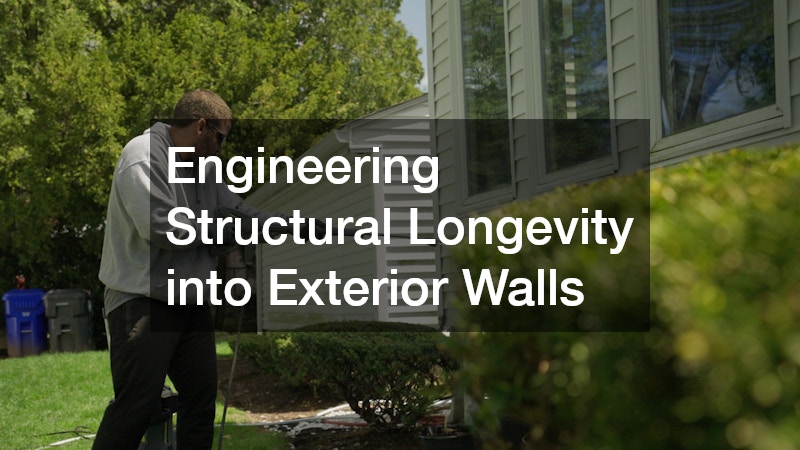
Even the most durable siding materials can suffer if moisture is allowed to sit against them indefinitely. Advanced construction practices solve this through the implementation of a rainscreen gap—a small airspace between the weather-resistant barrier and the siding. This gap allows water to drain downward freely and promotes airflow to dry out any residual dampness.
For homes utilizing heavy materials like brick veneer or natural stone, managing this hidden space is even more critical. Homeowners should engage a professional masonry service to ensure that the structural integrity of these heavy elements is matched by superior moisture management.
- Verify that weep holes are installed along the bottom course of the brickwork to give trapped water a clear exit path.
- Ensure that the mortar joints are properly struck and packed, as voids in the mortar allow wind-driven rain to penetrate the wall easily.
- Utilize low-pressure power washing services annually to remove accumulated soot, mold, and atmospheric pollutants without forcing high-pressure water behind the stone or brick veneer.
Mitigating Soil Movement and Concrete Cracking
The ground beneath your feet is constantly moving. Soils expand when absorbing water and shrink when drying. This cycle exerts significant pressure on your home’s foundation and surrounding hardscapes. Poorly engineered concrete surfaces can quickly develop deep cracks, uneven walkways, and structural settling due to this shifting.
To build a hardscape that stands the test of time, you must focus heavily on sub-grade preparation and reinforcement. Employing a qualified concrete service ensures that the earth is properly excavated, amended with crushed aggregate, and thoroughly compacted before any pouring takes place.
- Insist on the inclusion of steel rebar or wire mesh to provide tensile strength, allowing the slab to hold together under heavy vehicular loads.
- Incorporate deep, strategically placed control joints that dictate exactly where the concrete will crack as it shrinks during the curing process.
- Apply a high-quality curing compound immediately after finishing to lock in moisture, ensuring the concrete achieves its maximum intended structural strength.
Grading and Slope Requirements for Longevity
No matter how strong your foundation or pathways are, they will fail if water pools alongside them. Exterior grading ensures gravity helps by sculpting the soil around your property. Maintain a positive slope that drops at least six inches within the first ten feet from your home’s foundation wall.
When planning patios, walkways, and secondary paths, look beyond basic poured slabs. Working with specialized paving services allows you to introduce flexible, high-durability options like interlocking stone pavers.
- Interlocking pavers can shift slightly with the natural movement of the earth without cracking or breaking, unlike large monolithic concrete slabs.
- Use a permeable joint sand between the pavers to allow a portion of surface rainwater to filter directly down into the ground rather than creating sheets of surface runoff.
- Install rigid edge restraints along the perimeter of the paved path to keep the individual units from spreading apart over years of foot traffic.
Preventing Premature Wear on Heavy-Traffic Zones
Your driveway faces immense physical stress, more than most exterior property parts. It supports vehicle weight, resists chemical spills, and withstands extreme temperatures. Asphalt and concrete are the two main choices for construction, each needing unique preservation strategies to prevent premature deterioration, raveling, and pothole formation.
Asphalt is favored in colder climates for its inherent flexibility and its dark color, which helps melt snow faster. However, its longevity depends entirely on preventing water from penetrating its porous surface and washing away the compacted stone base underneath.
- Ensure the driveway is engineered with a slight cross-slope so that water drains off to the sides rather than pooling in the center.
- Keep the edges of the driveway clearly defined and protected by landscaping or concrete curbs to prevent the asphalt from crumbling outward under heavy loads.
- Repair minor surface cracks immediately with elastomeric fillers before winter arrives, as freezing water will expand and shatter the surrounding pavement.
Protecting High-Traffic Surfaces from Environmental Oxidation
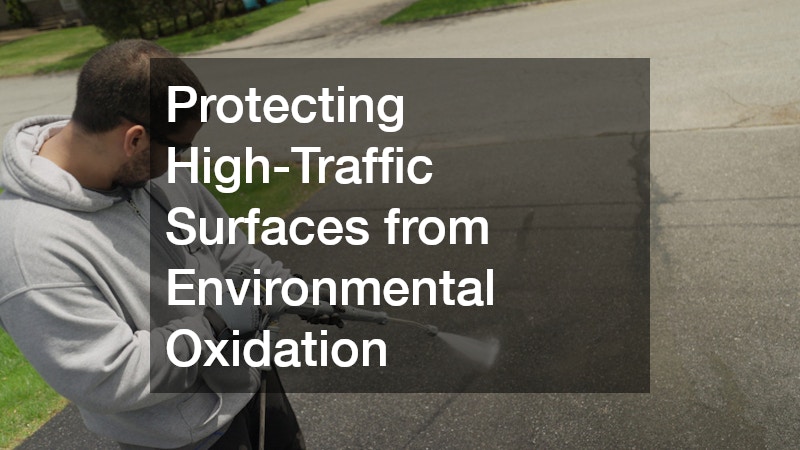
As soon as a new asphalt driveway is laid, it begins to degrade slowly due to environmental factors. UV rays from the sun break down the petroleum-based binders, causing the surface to turn gray, become brittle, and prone to cracking. Additionally, automotive fluids like oil and gasoline dissolve the asphalt binder on contact.
To halt this cycle of decay, homeowners must prioritize surface preservation. Regularly scheduling professional asphalt sealcoating services provides a sacrificial barrier that locks out UV rays, resists chemical spills, and prevents water molecules from seeping into the core of the pavement.
- Apply the first coat of sealant only after the new asphalt has fully cured, which typically takes anywhere from six to twelve months depending on weather conditions.
- Reapply the protective coating every three to five years, avoiding over-application which can cause the surface to become slick and peel away.
- Before applying any sealer, use thorough power washing services to strip away ground-in dirt, oil slicks, and loose debris, ensuring maximum adhesion of the new protective layer.
Selecting Materials That Resist Rot and Insect Damage
An outdoor deck or patio extends your living space into nature, but being horizontal, they face the full impact of weather elements. Traditional wood decks demand constant sanding, staining, and sealing to prevent insect and rot damage. Modern design favors advanced materials for durability and low maintenance.
When planning a new outdoor platform, consulting with experienced deck builders will help you navigate the structural nuances of different material classes.
- Capped composite decking features a wood-fiber core enveloped in a protective polymer shell, making it completely impervious to moisture, staining, and insect attacks.
- If you prefer natural timber, select premium hardwoods like Ipe or mahogany, which possess natural oils and high density that naturally repel pests and rot.
- Always use structural fasteners made of high-grade stainless steel or hot-dipped galvanized metal to prevent rust streaks and structural fastening failures over time.
Framing Safeguards for Elevated Structures Bearings
The beauty of a deck is only skin deep; its true safety and longevity depend entirely on the hidden framing structure underneath. A staggering percentage of deck failures occur at the ledger board—the critical point where the deck attaches directly to the rim joist of your house. If this connection is not perfectly waterproofed, water will seep into the house wall, rotting the structural rim joist until it can no longer support the weight of the deck.
- Install heavy-duty, self-adhering flashing membranes directly behind and over the ledger board before anchoring it to the house.
- Use through-bolts or engineered structural screws rather than simple lag screws to ensure a permanent, mechanical connection to the home’s frame.
- Maintain a small gap between the house siding and the deck boards to allow leaves and debris to fall through rather than trapping moisture against the wall.
Mitigating Tree Root Intrusion and Canopy Overgrowth
The living components of your property significantly affect the structural health of your home’s exterior. Trees provide shade, beauty, and wind protection, but unmanaged, they can damage hardscapes and roofing. Large root systems seek moisture, often growing under driveways, walkways, and foundations, exerting enough pressure to crack concrete slabs.
To maintain a safe harmony between your home and your flora, you must actively manage the growth of large vegetation. Hiring a professional tree service is essential for evaluating root paths and managing mature canopies safely.
- Plant large canopy trees at a safe distance from the house—ideally a distance equal to or greater than the expected mature height of the tree.
- Install physical root barriers along walkways and foundations to redirect root growth downward and away from vulnerable concrete structures.
- Prune overhanging branches regularly to ensure they remain at least ten feet away from your roofline, preventing limbs from scraping shingles and stopping pests from gaining easy access to your attic.
Controlling Subsurface Water with Smart Irrigation
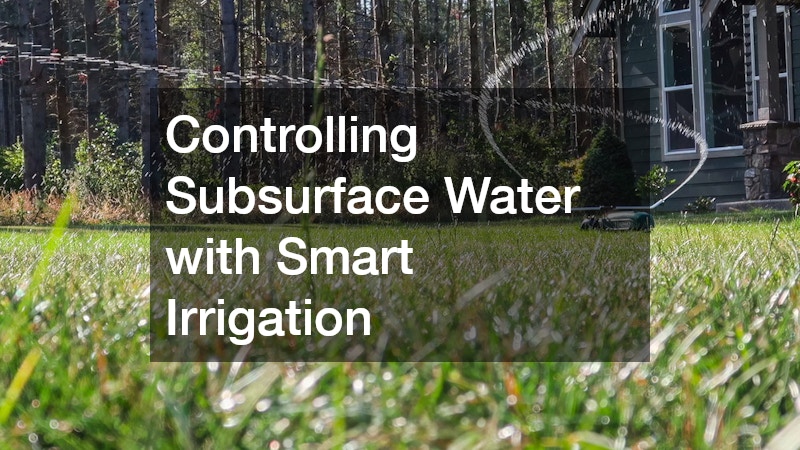
While managing natural rainfall is critical, overseeing artificial water use on your property is equally vital for structural preservation. Automated sprinkler systems are great for maintaining lush lawns, but if poorly designed or incorrectly adjusted, they can damage your home’s exterior. Sprinkler heads that oversaturate soil near your foundation create hydrostatic pressure, forcing water through basement walls and shifting foundational footings.
To prevent these self-inflicted moisture issues, you should partner with an experienced irrigation contractor to design a zoned, highly targeted delivery system.
- Ensure that no sprinkler zones are configured to spray water directly against your siding, windows, or foundation walls.
- Utilize targeted drip irrigation lines for flowerbeds and shrubs located close to the home, delivering water directly to the plant roots without soaking the surrounding structural soil.
- Integrate smart, weather-based irrigation controllers and rain sensors that automatically shut off the system during periods of natural precipitation, preventing dangerous soil oversaturation.
Building a durable home exterior involves strategic planning, careful material pairing, and preventative maintenance. Each layer of your home’s exterior, from gutters to the driveway’s stone base, has a specific defensive role. Properly establishing these layers reduces the risk of structural failures. Vigilance is crucial for long-term success. Conduct thorough seasonal inspections twice a year to spot early signs of wear, such as sagging gutters, cracks in walkways, or tree branches touching roof shingles. Addressing these issues promptly protects your home’s structural integrity, ensuring it remains a safe, dry, and beautiful sanctuary for years.