Your home’s exterior is the first impression visitors, neighbors, and potential buyers have of your property. A cohesive look doesn’t just make your home more visually appealing-it creates a sense of harmony that ties together architecture, landscaping, and functional outdoor features. When every element feels intentional, your home stands out in the best way possible.
Achieving that level of unity isn’t about spending the most money or following every trend. It’s about making thoughtful decisions that align materials, colors, textures, and layout. Whether you’re planning a full renovation or making gradual improvements, understanding how each component contributes to the bigger picture is key.
Start With a Clear Exterior Vision and Style Direction

Before making any changes, you need a clear direction for your home’s exterior. Without a guiding vision, it’s easy to mix styles, materials, and colors in a way that feels disconnected. Defining your home’s architectural style early helps guide every decision moving forward, from materials to finishes.
To stay consistent, it helps to establish a strong design foundation:
- Architectural style: Identify whether your home is modern, traditional, farmhouse, or transitional so every decision aligns with a consistent design language
- Base color selection: Choose a main siding color that complements your surroundings and provides a timeless foundation for the rest of the design
- Accent color strategy: Select one or two accent colors for trim, shutters, and doors to create contrast without overwhelming the exterior
- Mood board creation: Compile images, textures, and materials to visualize how all elements will work together before committing
- Color undertones: Pay close attention to warm versus cool tones to ensure all materials and finishes harmonize
- Consistency check: Revisit your original vision before making updates to avoid introducing mismatched elements
By grounding your decisions in a clear vision, you avoid mismatched upgrades and ensure that every change contributes to a cohesive exterior.
Coordinate Landscaping With Your Home’s Architecture
Your landscaping should feel like a natural extension of your home rather than a separate feature. A well-planned approach using custom landscape design allows you to match plant shapes, layout, and overall structure to your home’s architectural style, creating a seamless transition between built and natural elements. When landscaping aligns with your home’s lines, proportions, and materials, it enhances curb appeal and creates a more intentional, polished look.
Maintaining balance over time is just as important as the initial design. Overgrown or poorly placed greenery can disrupt the visual flow, which is why tree removal is sometimes necessary to restore proportion and highlight key features of your home. Keeping landscaping intentional ensures your exterior always looks clean and thoughtfully designed.
To create a cohesive landscape that complements your home:
- Architectural alignment: Choose plants and layouts that mirror your home’s structure, such as clean lines for modern homes or layered, symmetrical arrangements for traditional styles
- Plant selection strategy: Use a limited variety of plants to avoid a cluttered look and create visual consistency across your yard
- Layered planting design: Arrange plants in tiers-tall trees in the back, medium shrubs in the middle, and low ground cover in front-for depth and balance
- Seasonal planning: Select plants that provide year-round interest through foliage, blooms, or texture changes
- Sightline management: Remove or trim plants that block windows, doors, or architectural focal points to keep your home visible and inviting
- Strategic tree removal: Eliminate dead, overcrowded, or poorly placed trees to improve symmetry and allow other design elements to stand out
Create Defined Outdoor Zones for Visual Balance
Breaking your outdoor space into functional zones adds both structure and usability. Incorporating hardscaping elements like patios, pathways, and retaining walls creates a sense of order while guiding movement through the space in a natural way.
Working with local masonry contractors can help you achieve a polished and consistent look across these areas. To maintain visual harmony, focus on:
- Purpose-driven zones: Designate areas for dining, relaxing, or entertaining so each section serves a clear function without overlapping
- Material consistency: Use the same stone, brick, or pavers across different zones to create visual continuity throughout the space
- Pattern alignment: Keep layout patterns uniform to avoid a disjointed or chaotic appearance
- Smooth transitions: Ensure pathways and borders flow naturally between zones without abrupt changes in direction or material
- Proportional scaling: Size each zone appropriately so it complements the overall yard rather than overpowering it
- Open space balance: Leave intentional gaps or open areas to prevent the yard from feeling crowded or overly busy
When each section of your yard has a purpose but still connects visually, the entire exterior feels more cohesive.
Align Walkways, Driveways, and Surfaces With the Overall Design
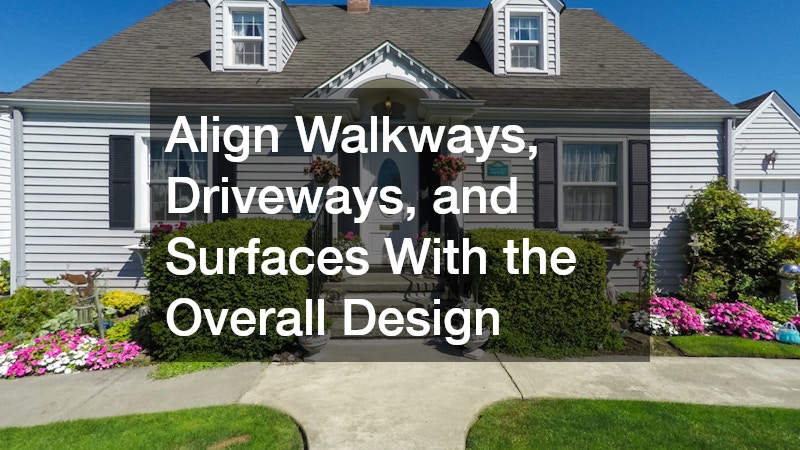
Walkways and driveways play a major role in tying your exterior together, even though they are often overlooked. Choosing materials and finishes that complement your home’s architecture helps create a seamless transition between different parts of your property.
Partnering with experienced concrete contractors ensures that surfaces are installed properly and built to last. In addition, local paving services can help refine the design with details that improve both function and aesthetics:
- Decorative borders: Add edging that mirrors materials used in patios or garden beds for a unified appearance
- Color coordination: Select tones that complement your home’s exterior rather than clash with siding or trim
- Consistent dimensions: Maintain uniform widths and spacing for walkways to create a clean, organized look
- Surface textures: Introduce subtle textures that add visual interest without overwhelming the design
- Seamless transitions: Connect driveways and walkways smoothly to avoid awkward breaks in flow
- Durability planning: Choose materials that resist wear and maintain their appearance over time
These subtle upgrades make a significant difference in creating a unified appearance.
Integrate Water Features That Enhance, Not Distract
Water features can elevate your outdoor space, but they need to be thoughtfully designed to avoid overwhelming the rest of your exterior. The goal is to enhance the environment while maintaining balance with surrounding elements. When properly integrated, water features can act as focal points that draw attention without disrupting the overall design.
Projects like pond excavations should be planned with careful attention to placement and materials so they blend naturally into the landscape. Similarly, working with pool contractors ensures larger features are scaled appropriately and integrated seamlessly. The key is to treat water features as part of the overall design rather than standalone additions.
To ensure water features enhance your exterior cohesively:
- Scale and proportion: Choose a feature size that fits your yard and doesn’t overpower surrounding elements
- Material consistency: Use stone, tile, or finishes that match other exterior features to maintain visual unity
- Strategic placement: Position water features where they complement focal points rather than compete with them
- Natural integration: Design edges and surroundings so the feature blends into landscaping instead of appearing isolated
- Maintenance planning: Select designs that are easy to maintain to prevent deterioration that could disrupt your home’s appearance
- Professional execution: Work with experienced pool contractors to ensure proper installation, drainage, and long-term performance
Maintain Clean Lines With Strategic Cleanup and Prep Work
Before starting any exterior upgrades, it’s essential to remove anything that disrupts the visual flow of your space. Clutter, outdated features, and neglected areas can make even the best design choices feel disorganized. By clearing out unnecessary elements, you create a clean foundation that allows new improvements to stand out and feel intentional rather than layered on top of existing chaos.
Preparation is just as important as the final design. Taking the time to properly clean, organize, and reset your outdoor space ensures that every new addition contributes to a cohesive look. Whether you’re planning a full renovation or smaller updates, this step helps you avoid design conflicts and makes it easier to execute your vision with precision.
To maintain clean lines and prepare your space effectively:
- Clutter removal: Clear out old furniture, broken décor, and unused items that create visual noise and distract from your home’s design
- Demolition of outdated features: Remove worn-out patios, cracked walkways, or mismatched structures that no longer fit your overall aesthetic
- Efficient waste management: Use a dumpster rental to keep debris contained and your property organized throughout the project
- Surface preparation: Clean and level areas before installing new features to ensure smooth, professional-looking results
- Landscape reset: Trim overgrown plants and consider selective tree removal to restore balance and improve sightlines
- Defined edges: Re-establish borders around garden beds, walkways, and lawns to create crisp, structured lines
- Ongoing maintenance plan: Regularly clean and maintain your exterior to prevent buildup that can disrupt the cohesive look over time
By starting with a clean, well-prepared space, every design decision becomes more impactful, and your exterior will feel polished, intentional, and visually balanced.
Tie Exterior Elements Together With Consistent Materials
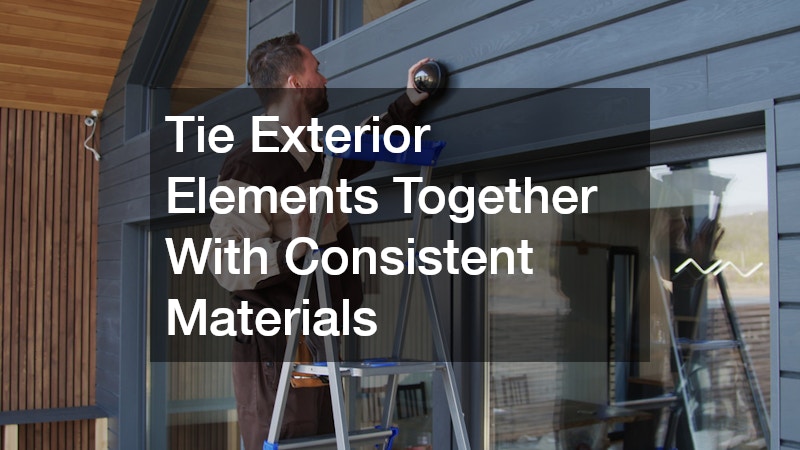
Consistency is one of the most important factors in creating a cohesive exterior. When materials are repeated across different features, they create a sense of unity that ties everything together visually.
Working with local masonry contractors can help ensure materials are matched and installed properly across your property. Incorporating hardscaping elements that echo each other in texture and color further strengthens the design:
- Material repetition: Use the same stone, brick, or pavers across multiple features to reinforce visual continuity
- Texture matching: Align textures between vertical and horizontal surfaces for a more unified appearance
- Color harmony: Keep material colors within the same palette to avoid clashing tones
- Minimal material palette: Limit the number of materials used to prevent visual overload
- Accent restraint: Use decorative elements sparingly so they enhance rather than distract
- Installation consistency: Ensure patterns, spacing, and finishes are uniform across all features
This approach creates a polished, intentional look that feels balanced and complete.
Improve Windows and Entry Points for a Polished Look
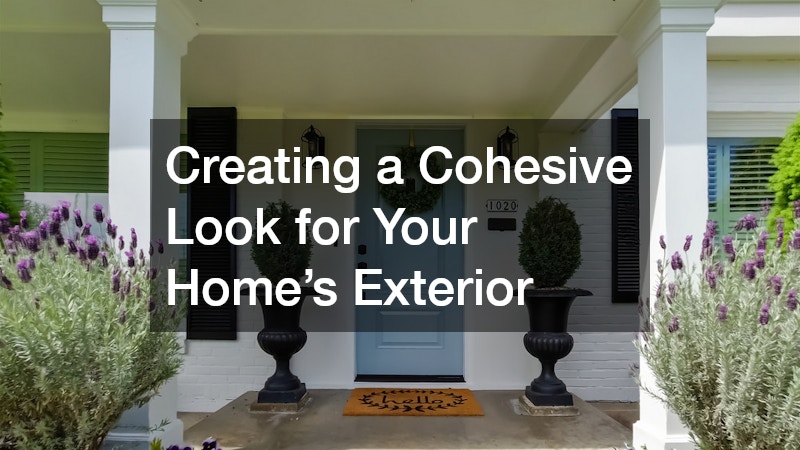
Windows and entryways naturally draw attention, making them essential to your home’s overall appearance. Adding thoughtful details like exterior window treatments can enhance architectural features and reinforce your design style.
Your entryway should also serve as a focal point that ties everything together. Consider how elements such as lighting, door color, and surrounding décor contribute to the overall aesthetic:
- Window accents: Choose shutters or trim styles that align with your home’s architecture
- Color coordination: Match window and door elements with your overall exterior palette
- Symmetrical layout: Use balanced placement of features to create a clean, welcoming look
- Statement door: Select a front door color that stands out while still fitting the overall design
- Complementary décor: Add planters or accents that tie into your landscaping style
- Fixture alignment: Ensure lighting and hardware match other finishes throughout the exterior
- These details may seem small, but they play a major role in creating a cohesive and welcoming exterior.
Plan Lighting and Finishing Details for Cohesion
Lighting is one of the most effective ways to highlight your home’s exterior while reinforcing its design. Choosing fixtures that match your home’s style helps maintain consistency and ensures that every detail feels intentional.
In addition to lighting, smaller finishing touches can make a big impact when they are thoughtfully coordinated:
- Finish consistency: Use the same metal finish across all fixtures for a uniform look
- Pathway lighting: Align lights along walkways to enhance both safety and visual flow
- Feature highlighting: Illuminate architectural details to draw attention to key design elements
- Coordinated accessories: Match house numbers, mailboxes, and hardware with your overall style
- Even spacing: Maintain consistent placement of fixtures for a polished appearance
- Style cohesion: Avoid mixing drastically different fixture styles that disrupt the design
When these elements are aligned, they help bring the entire exterior together in a subtle but powerful way.
Work With the Right Professionals for a Unified Result

Achieving a cohesive exterior often requires collaboration between multiple professionals, and choosing the right team can make all the difference. Contractors who understand design consistency will help ensure that every element aligns with your overall vision.
Working with specialists such as concrete contractors and pool contractors allows you to maintain quality across different aspects of your project. To get the best results:
- Clear communication: Share your vision and expectations upfront to ensure alignment
- Material review: Compare samples before installation to maintain consistency across features
- Timeline coordination: Schedule projects strategically so different elements come together smoothly
- Relevant experience: Choose professionals who have worked on similar cohesive design projects
- Quality focus: Prioritize craftsmanship to avoid mismatched or poorly executed details
- Ongoing collaboration: Maintain communication throughout the project to keep everything aligned
A coordinated approach leads to a smoother process and a more polished final result.
Creating a cohesive look for your home’s exterior is about more than individual upgrades-it’s about how every element works together. When you approach your design with intention, consistency, and attention to detail, the result is a home that feels complete, balanced, and visually striking.
By planning carefully, choosing complementary materials, and working with experienced professionals, you can transform your exterior into a space that reflects your style while maximizing both beauty and value.